
Energy operators have more AI use cases than they can deliver: generation forecasting, consumption optimisation, preventive maintenance, storage dispatch. Each of them depends on the same foundation, and it is not a model.
The data problem
Energy data arrives from many places: exchange markets, smart meters, inverters, weather feeds and asset monitoring. Each source has its own format, frequency and quirks. Timestamps do not line up. Values are missing or wrong. Before anything can learn from the data, someone has to ingest, cleanse, align and structure it.
That work is easy to under-estimate, and it decides whether models and dashboards can be trusted. Gartner has cited poor data quality among the main reasons AI projects are abandoned.
What a good foundation provides
- Automated cleansing, time alignment and aggregation, so every consumer sees consistent data.
- Streaming and batch, so time-critical decisions get near real-time data and heavier analysis gets complete history.
- A single repository, shared by dashboards, models and AI assistants, so they agree.
- Feature engineering, which turns raw signals into inputs that models can use.
What it unlocks
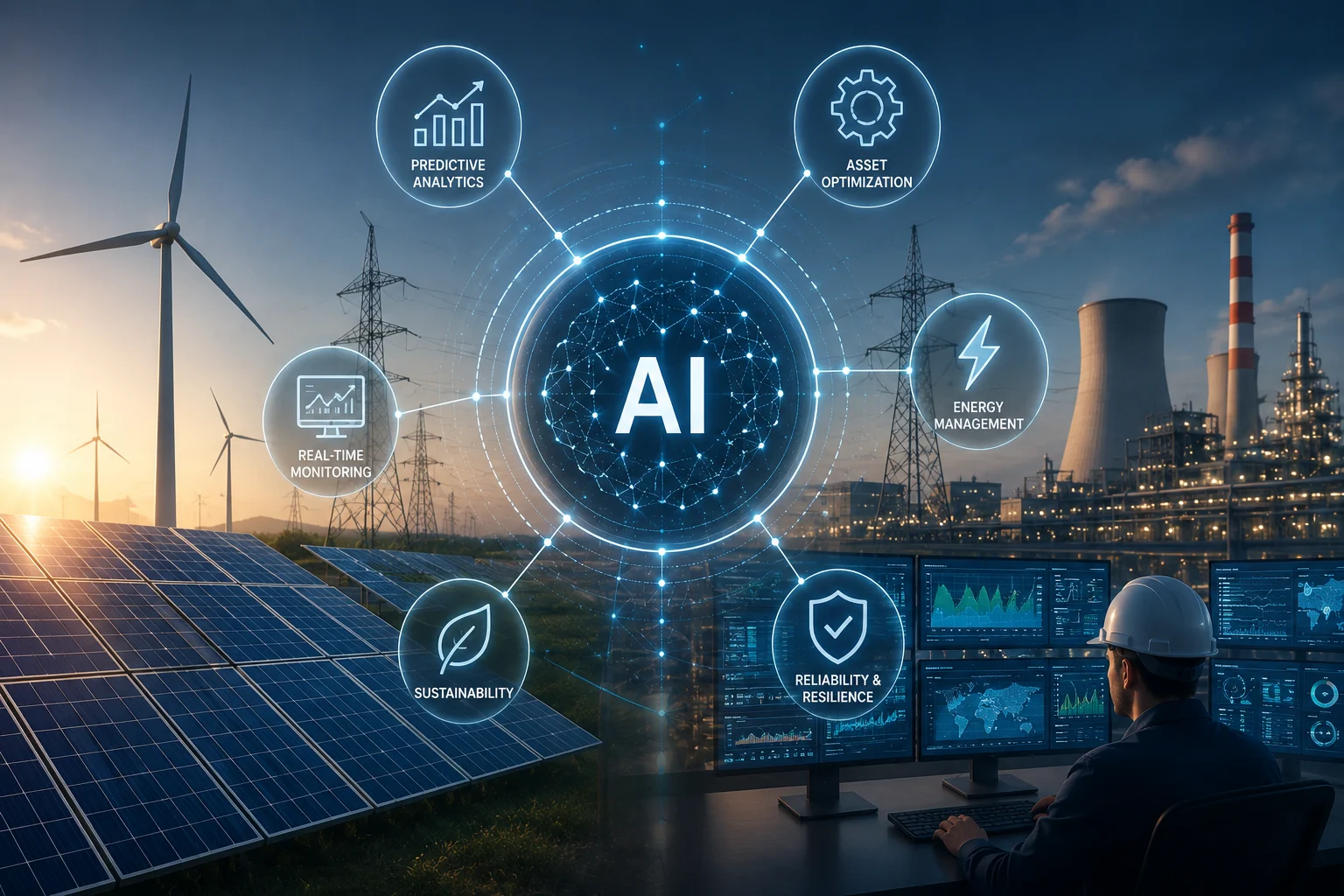
With the foundation in place, the use cases become much more tractable: forecasts of solar and wind output per site that combine weather and history, anomaly detection that characterises abnormal patterns in production, failure prediction that supports preventive maintenance, storage optimisation that weighs prices, forecasts, consumption and battery degradation, and assistants that answer operators’ questions from live data.
How we approach it
CloudStraight builds energy data pipelines and the applications on top, with live implementations in the sector. See our Energy & Critical Infrastructure page.